


Discover why two sapphires can look completely different, from colour and origin to cut, light and personal gemstone selection for bespoke jewellery.
Back to Works in Progress
One of the most common reactions I hear when showing clients sapphires is:
"I didn't know sapphires came in that colour."
Most people are familiar with the deep blue sapphire. It has been treasured for centuries and remains one of the most enduring choices for engagement rings and significant jewellery.
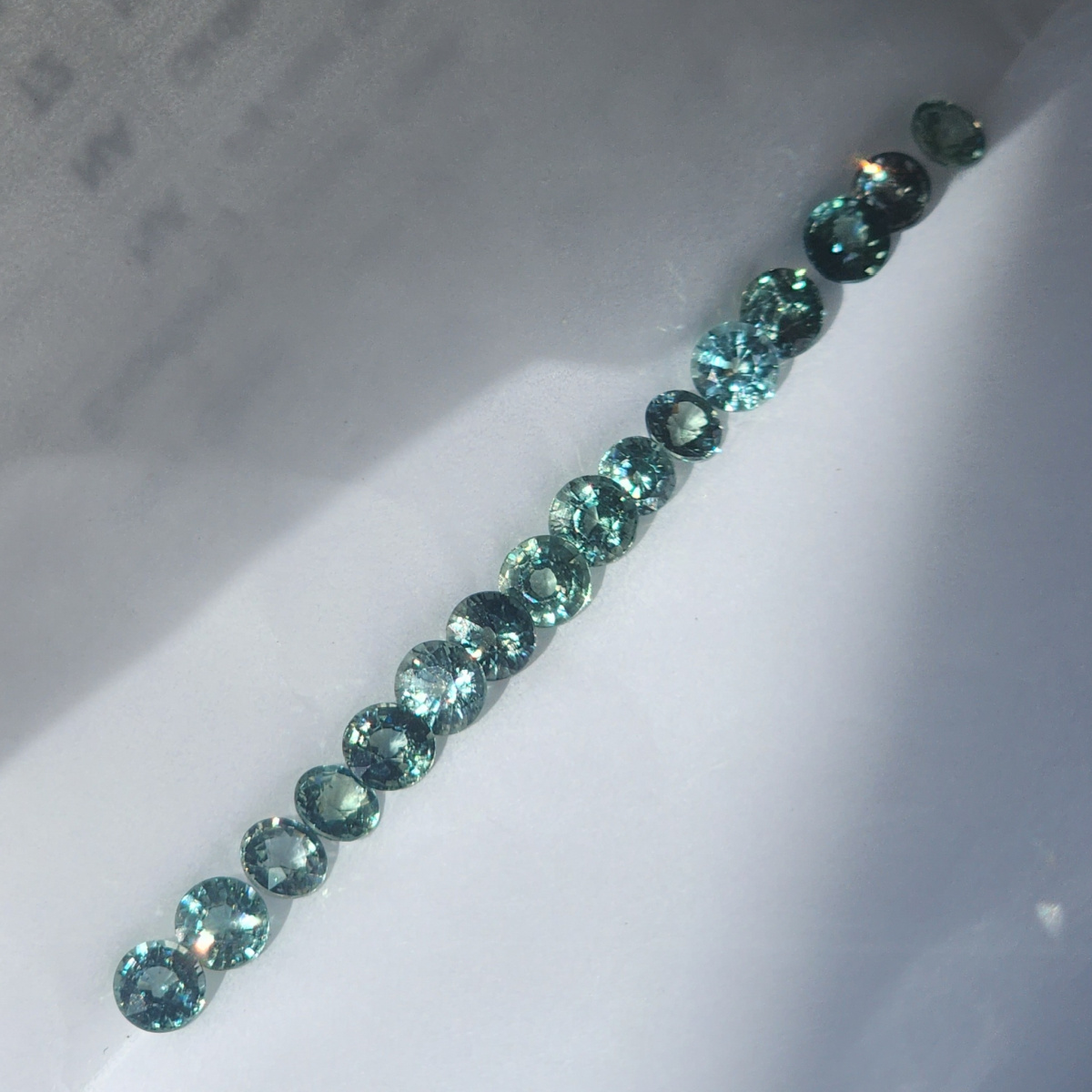
What often comes as a surprise is that sapphire occurs naturally in an extraordinary range of colours.
Green. Teal. Purple. Yellow. Peach. Pink. Orange.
Some sapphires even display several colours within the same gemstone.
For many people, discovering this range opens up possibilities they never knew existed. A client may arrive convinced they are looking for a traditional blue sapphire, only to find themselves captivated by a green stone, a soft peach sapphire, or a parti sapphire displaying multiple colours within a single gem.
Part of the appeal is individuality. No two sapphires are exactly alike, and that uniqueness is often what draws people to them.
For those creating jewellery intended to be worn and loved for generations, sapphires offer something else that is equally important.
Durability.
An engagement ring, dress ring or heirloom piece should be able to live a life. It should accompany its owner through ordinary days, celebrations, travel, work and family gatherings. Sapphire is one of the hardest gemstones used in jewellery, making it exceptionally well suited to pieces designed to be worn rather than simply admired.
Yet colour alone is not what makes one sapphire look different from another.
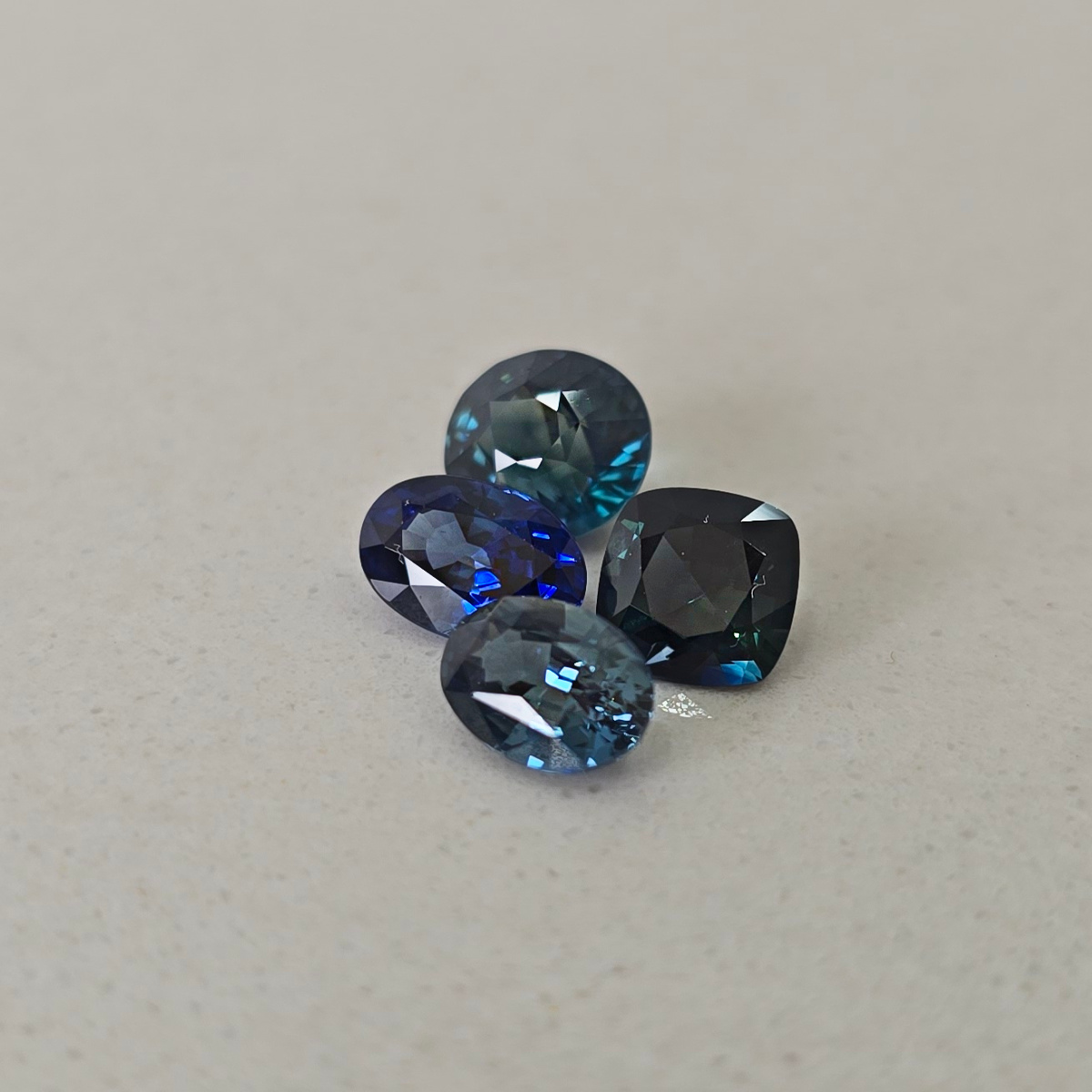
In fact, I can place two blue sapphires side by side and they may appear as though they belong to entirely different gemstone families.
This is where sapphire becomes truly fascinating.
When jewellers look at a gemstone, we are not simply looking at whether it is blue, green or purple. We are also looking at tone and saturation.
A sapphire may be light or dark. It may have intense colour or a softer, more subtle appearance. Two sapphires may both be described as blue, yet one can appear bright and vibrant while another feels deep and velvety.
Neither is necessarily better.
They simply create a different feeling.
The location where a sapphire formed can also influence its appearance.
Australian sapphires are often known for their deeper greens, teals and blue-green colours. Sri Lankan sapphires may display lighter, brighter tones, while Madagascan sapphires can offer an extraordinary range of colours and characteristics.
Of course, every gemstone is an individual, and there are always exceptions. Origin alone does not determine beauty or value.
What it does provide is another layer of character.
Part of the joy of working with natural gemstones is that each sapphire carries its own story, formed millions of years ago and unlike any other.
Colour is often the first thing that draws us to a gemstone, but it is only part of the story.
The way a sapphire is cut has an enormous influence on how it appears. Two gemstones of similar colour may look completely different because of the way they interact with light. A well-cut sapphire can appear lively and bright, while another may seem darker or more subdued.
Lighting itself can also transform a gemstone's appearance.
A sapphire viewed outdoors on a bright day may look quite different under evening lighting or inside a softly lit room. Some gemstones seem to come alive in natural light. Others reveal their character more fully indoors.
This is one of the reasons I prefer to view gemstones in person whenever possible. Photographs can be useful, but they rarely tell the whole story.
Cameras often struggle to capture subtle colour variations, and screens display colour differently from one device to another. It is not unusual for a client to fall in love with a sapphire they had barely noticed in a photograph, or be surprised by how different a gemstone feels when held in their hand.
When sourcing gemstones for a bespoke commission, I am not searching for the most expensive sapphire or even the most technically perfect sapphire.
I am searching for the right sapphire.
The right sapphire for the design.
The right sapphire for the way the jewellery will be worn.
Most importantly, the right sapphire for the person who will wear it.
Some people are drawn to deep, dramatic colours. Others are captivated by softer tones or unusual colour combinations. The gemstone becomes part of their story, and that individuality is often what makes a piece truly memorable.
One of the great privileges of creating bespoke jewellery is helping clients discover gemstones they may never have considered before.
Often the sapphire that ultimately becomes the centrepiece of a commission is not the one they imagined at the beginning.
That is part of the process.
The beauty of natural sapphires is that no two are ever exactly alike.
And perhaps that is why two sapphires can look completely different, even when they share the same name.


Discover what really happens when a jeweller sources a gemstone, from meaning and colour to trusted dealers, careful selection and bespoke jewellery design.

Choosing a gemstone for bespoke jewellery is about more than colour or value. Discover how gemstones are selected, sourced and matched to the person who will wear them.
When a piece of jewellery is lost or damaged, most people assume the insurance process will simply replace what they had.In reality, that is not always what happens.This is something I have seen many times over the years at the bench. Not occasionally, but consistently enough that it is worth explaining how the process works, and where people can get caught out.


The way jewellery is made matters so much. It is the difference between treasure and trend
Here are some ideas that will keep your jewellery looking it’s best