


Discover what really happens when a jeweller sources a gemstone, from meaning and colour to trusted dealers, careful selection and bespoke jewellery design.
Back to Works in Progress
Gemstone sourcing rarely begins with a catalogue.
More often, it begins with meaning.
A client may come to me because a particular gemstone has always mattered to them. Perhaps their grandmother wore one. Perhaps it is their birthstone, or the birthstone of someone they love. Sometimes the starting point is less specific, but just as personal: a colour they have always been drawn to.
Blue, for example, can mean many things.
It might mean the soft, watery blue of aquamarine. It might mean the traditional Ceylon colour people often imagine when they think of sapphire. It might mean something bright and electric, like zircon. It might mean teal, grey-blue, green-blue, or a shade they have not yet seen but recognise immediately when it appears.
That is where the conversation begins.
Before I source anything, I need to understand more than the gemstone name. I need to understand how the piece will be worn, how often it will be worn, what sort of life it needs to withstand, and what the client is hoping to feel when they look at it.
A gemstone can be beautiful and still not be the right choice.
Some stones are better suited to rings worn every day. Others are happier in pendants, earrings, or pieces worn more occasionally. Sapphire, for example, is a wonderful option for jewellery that will be worn often because it is one of the more durable coloured gemstones. Not bulletproof, of course. No gemstone is. But for many rings, it is a very good place to begin.
Other gemstones may need more care. That does not mean they are wrong. It simply means the client needs to understand what they are choosing.
That matters to me.
My role is not to make the decision for someone. My role is to give them the best information I can, so they can make a decision with clarity. My clients know themselves. They know what they want to wear. I can guide, explain, and sometimes gently caution, but at the end of the day the piece belongs to them.
Once I understand the brief, the real searching begins.
I work with trusted gem dealers, people whose judgement and ethics I respect. I will look through stock lists, study photographs, request videos where needed, and speak directly with dealers about particular stones. Sometimes the search stays within New Zealand. Sometimes it reaches overseas, which brings its own considerations, including timing, freight, documentation and import requirements.
There is often far more happening behind the scenes than a client sees.
I may comb through multiple stock lists looking for a particular colour, shape or feeling. I may phone a dealer and ask whether they have anything tucked away in a safe that has not made it to the website. I may find something that looks perfect, only to discover it is already out on approval for another client to view.
That is part of it.
Natural gemstones are not made to order. You can have a very clear idea of the colour, size and shape you would love, and sometimes that exact stone simply is not on the market at that moment. Not for lack of trying. It may take patience.
But when the right stone appears, the search is worth it.
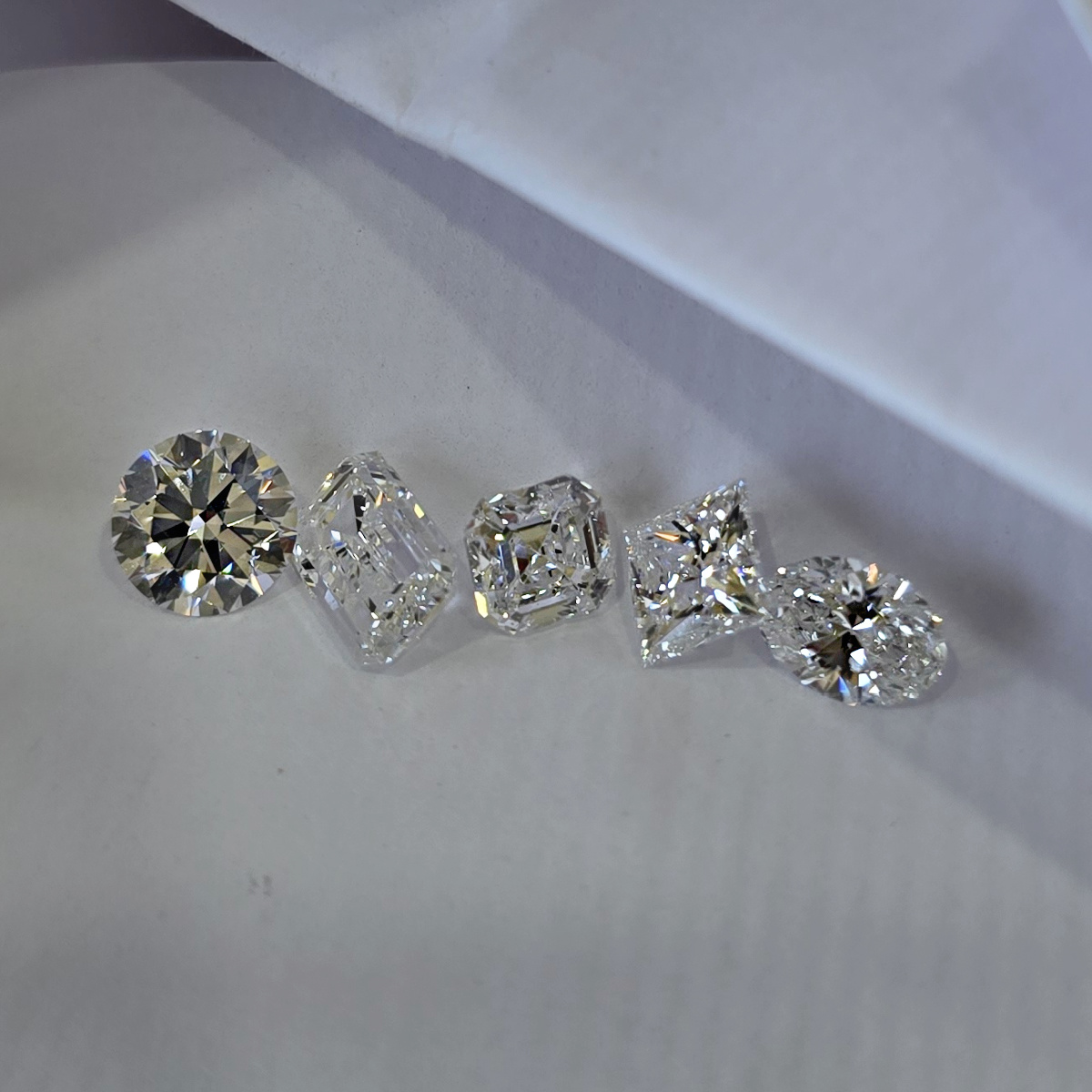
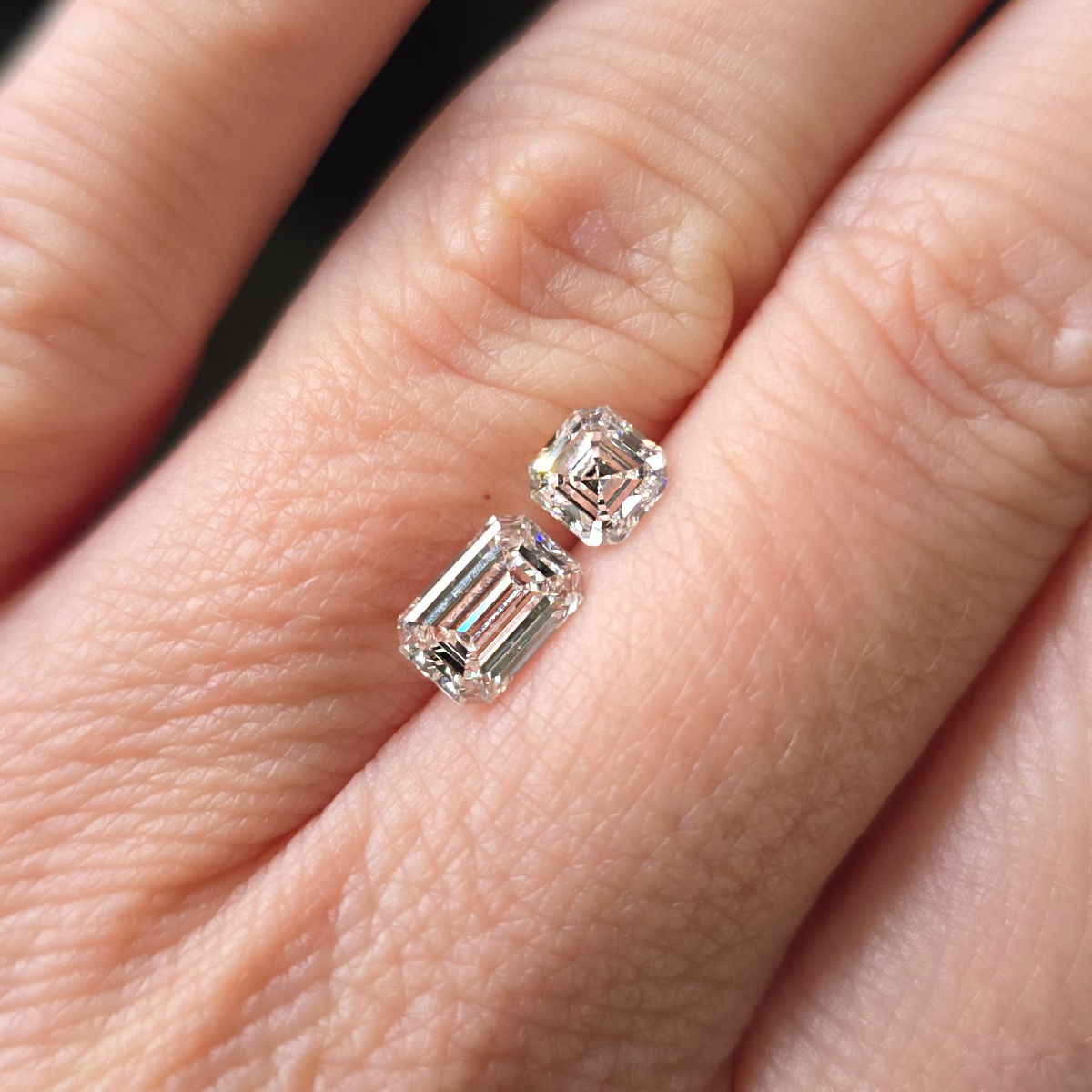
I usually bring in a carefully chosen selection for the client to view in person at the studio. By that stage, the stones have already been considered against the brief. They sit within the direction of the design, the intended wear, the practical requirements and, where established, the budget.
Seeing gemstones in person is still unbeatable.
A stone can look one way in a photograph and another way entirely in the hand. I like clients to see gemstones in the studio light, in natural light, and sometimes outside. Showroom lighting can flatter almost anything. Real life is different. A gemstone needs to be beautiful where it will actually be worn.
Sometimes I will include stones that show slightly different directions within the brief.
Two gemstones can sound almost identical on paper and feel completely different in person. One may feel softer, another more vivid. One may have a deeper mood, while another has more brightness or movement.
Seeing them together helps a client understand what they are truly drawn to.
It is not about finding fault.
It is about learning what feels right.
When a client comes in to view stones, I do not put everything in front of them at once. That can create too much noise.
I prefer to introduce gemstones one at a time. Each stone deserves its own moment. If a client dismisses one, I physically remove it from the conversation. Out of sight, out of mind. Slowly, the choice becomes quieter.
Most of the time, we narrow it down quite quickly.
If the decision becomes difficult, we take the pressure off. We talk about something else. We give the mind a chance to settle. When we come back to the gemstones, the client will often reach for one first.
That tells me a lot.
By the time a gemstone is sitting in front of a client, I have already considered the practical things. I have considered the wearability, the source, the budget, the design direction and the quality of the stone. At that point, I am watching for something more instinctive.
The stone that captures their heart.
The one that sings out above the others.
The one they know they will think about forever if they do not take it home.
For me, that moment is often immediate. By then I have spent so much time thinking about the client and the piece we are creating that I usually know as soon as I open the little parcel.
After the gemstone is chosen, the design can begin properly.
I tend to select the stone first, then design around it. I will often create several concepts. The first is usually the one my instincts tell me to follow around the chosen stone. The others may explore different directions, making sure we have considered the possibilities. Sometimes one is a complete wild card.
That is part of the joy of bespoke work.
The gemstone is not just dropped into a setting. It becomes the starting point for the piece.
Sourcing a gemstone is careful work. It takes knowledge, patience, trusted relationships and a willingness to keep looking until the right option appears.
But it is also exciting.
There is something wonderful about meeting gemstones unset. Before the metal, before the setting, before the finished ring, there is this small, extraordinary thing formed by the earth and waiting for its place.
Choosing one is not a transaction.
It is a moment of recognition.
And when it is done well, the client does not simply choose a gemstone.
They choose the beginning of a piece they will wear, love and keep.
Image note: These natural enhanced black diamonds were specially sourced from overseas for a bespoke signet ring commission. Kite-shaped black diamonds were not available in New Zealand at the time, and after searching internationally, I found only two suitable stones. I brought both in so my client could choose the one that felt right. The second diamond has since been selected for another commission and is now moving through the workshop process.

.jpg)


Discover why two sapphires can look completely different, from colour and origin to cut, light and personal gemstone selection for bespoke jewellery.

Choosing a gemstone for bespoke jewellery is about more than colour or value. Discover how gemstones are selected, sourced and matched to the person who will wear them.
When a piece of jewellery is lost or damaged, most people assume the insurance process will simply replace what they had.In reality, that is not always what happens.This is something I have seen many times over the years at the bench. Not occasionally, but consistently enough that it is worth explaining how the process works, and where people can get caught out.


The way jewellery is made matters so much. It is the difference between treasure and trend
Here are some ideas that will keep your jewellery looking it’s best